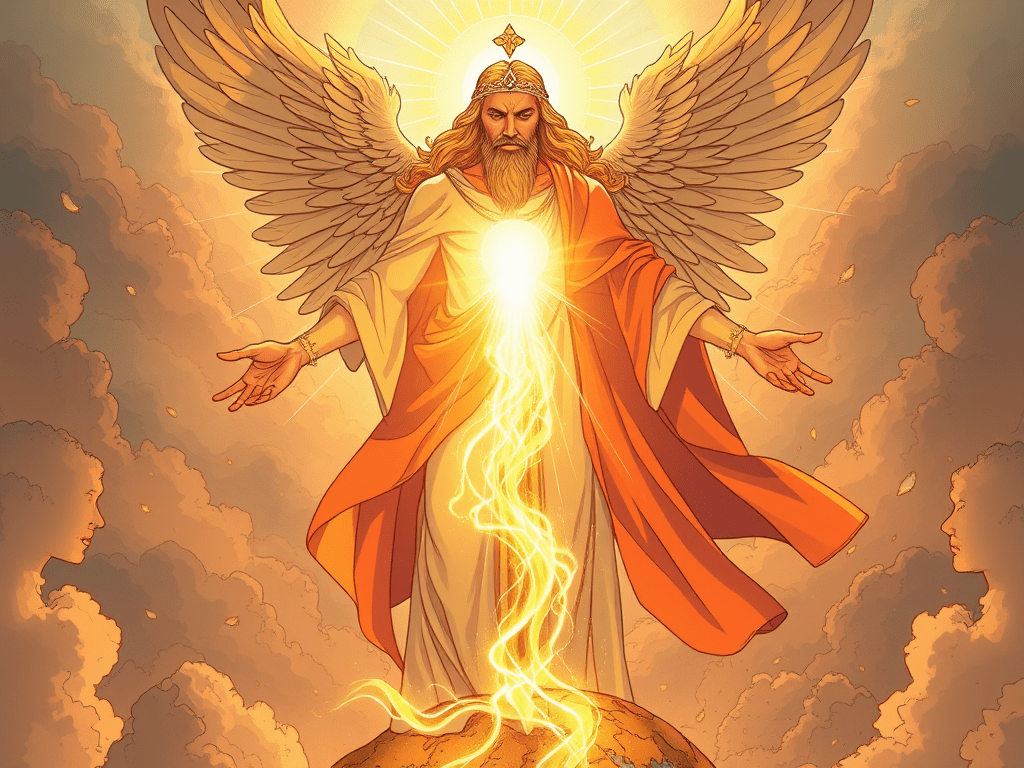
“Honor your father and your mother, so that you may live long in the land the Lord your God is giving you”
Exodus 20:12
The Fifth Commandment, “Honor your father and your mother, so that you may live long in the land the Lord your God is giving you,” is one of the most well-known yet often misunderstood tenets of biblical law. Traditionally, it’s interpreted as a call to respect, obey, and care for one’s parents. But what if this commandment holds a deeper, more profound meaning that transcends mere earthly family dynamics?
This is the question posed by Abd-ru-shin (the pen name of Oskar Ernst Bernhardt, 1875-1941), the author of the seminal spiritual work In the Light of Truth: The Grail Message. His critical examination of religious dogma offers a radical reinterpretation of this commandment, shifting the focus from blind obedience to a conscious, spiritual duty with cosmic implications.
The Traditional View: A Foundation of Social Order
On the surface, the commandment is a cornerstone of a stable society. It instructs children to respect their parents’ authority, learn from their experience, and support them in old age. The promise attached—”that you may live long in the land”—suggests that a society built on such respect will be harmonious and enduring. For millennia, this has been the primary, exoteric understanding.
Abd-ru-shin’s Critical Perspective: A Call to Spiritual Discernment
Abd-ru-shin does not dismiss this earthly duty outright but argues that a literal interpretation is incomplete and can even be harmful if applied without wisdom. He critically states that blind adherence to any commandment without understanding its spirit leads to stagnation and error.
He writes, “The Commandments were not given to men for them to obey blindly, but for them to take into their hearts, to understand, and then to fulfill in full consciousness of the responsibility.” (Abd-ru-shin, In the Light of Truth). This principle is key to his view of the Fifth Commandment.
For Abd-ru-shin, “father and mother” are not solely our biological parents. He expands the concept to its metaphysical roots:
“The ‘father’ is the Spirit, which is a particle of God, and the ‘mother’ is the soul, which receives the seed of the spirit and brings it to maturity in the earthly world.”
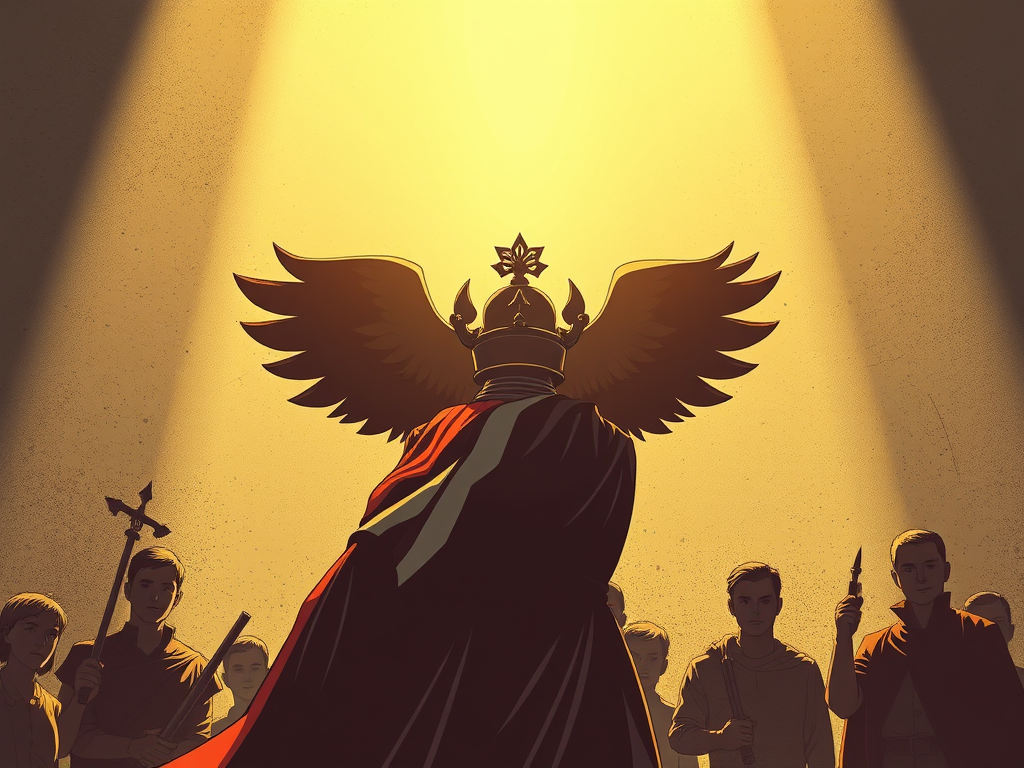
In this light, the commandment becomes an instruction for our entire spiritual existence. To “honor” your father (the Spirit) means to align your will with the Divine Will flowing through you—to choose clarity, truth, and upward striving. To “honor” your mother (the soul) means to care for and purify your inner self—your emotions, desires, and character—so it can become a clear vessel for the spirit.
HONOR
Balancing Earthly Duty and Spiritual Truth
This does not negate our earthly responsibilities. Abd-ru-shin clarifies that honoring our physical parents is a natural consequence of this higher understanding. However, it re-contextualizes it. We honor them not out of fear or rigid obligation, but with gratitude for providing the physical body that allows our spirit to experience and learn on earth.
He offers a crucial caveat: this honor must never come at the expense of our spiritual integrity. If earthly parents demand actions that are against the Laws of God (e.g., promoting hatred, dishonesty, or sloth), our primary duty is to our spiritual “Father.”
“You should honor and love your parents, but never to the extent that you thereby offend against the Divine Laws! … The human being has only one Lord, and that is God! To Him alone belongs the highest love and the highest honor.” – (Abd-ru-shin, In the Light of Truth)
This critical statement prevents the commandment from being used to justify toxic relationships or the perpetuation of negative family patterns. True honor sometimes means upholding a higher truth than what our parents may represent.
The Promise: “That You May Live Long in the Land”
Abd-ru-shin interprets the promise not as a guarantee of a long physical life, but as a spiritual principle. The “land” is the fertile ground of our own soul and our connection to the Divine. By honoring our spiritual origin (Father-Spirit) and nurturing our inner self (Mother-Soul), we establish ourselves firmly in the “land” of spiritual reality.
This leads to a “long life” in the sense of spiritual vitality, resilience, and continuity of consciousness beyond a single earthly existence. We become grounded in what is eternal, thus truly “living long” in the realm that God gives us—a conscious, awakened life.
Conclusion: A Commandment for Conscious Living
This interpretation challenges us to move beyond a childlike obedience to a mature, conscious practice. The Fifth Commandment is transformed from a simple social rule into a guiding principle for personal and spiritual development.
It calls us to:
- Honor the Divine within us by living according to higher laws.
- Honor our soul by refining our character.
- Honor our earthly parents with gratitude and discernment, not blind submission.
By doing so, we fulfill the commandment’s deepest purpose: anchoring ourselves in the eternal “land” of Truth, ensuring the long and prosperous life of our spirit.
 MindStateMatters
Leave a comment