
Introduction: More Than a Rule
“I am the Lord your God, who brought you out of Egypt, out of the land of slavery. You shall have no other gods before me.”
(Exodus 20:2-3) – 1st Commandment
For millennia, this First Commandment has stood as the foundational pillar of monotheistic faith. Traditionally, it’s interpreted as a prohibition against worshipping physical idols like golden calves or pagan deities. But in our modern world, where literal idol worship is rare for many, does this ancient edict still hold relevance?
The answer is a resounding yes, but its true meaning runs far deeper than a simple historical directive. According to the spiritual visionary Abd-ru-shin (the pen name of Oskar Ernst Bernhardt, 1875-1941), this commandment is not just a rule to be followed, but a profound, living truth about the very nature of human consciousness and our relationship with Divine Law.
The Surface Reading: A Historical and Theological Foundation
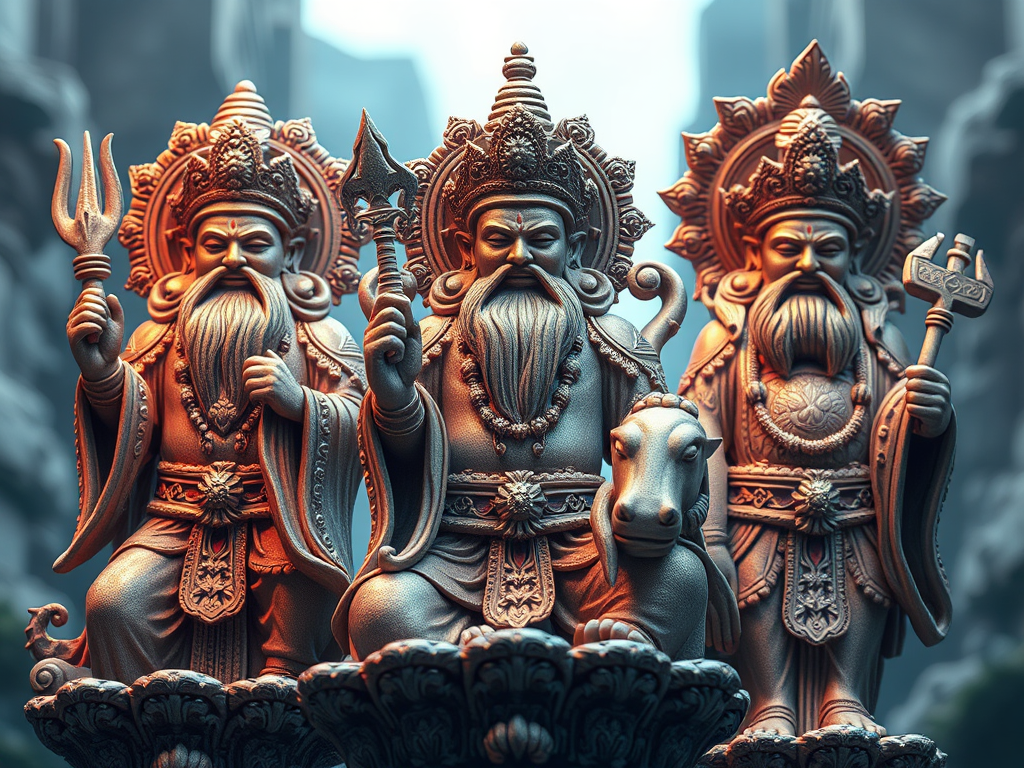
At its most immediate level, the First Commandment served a clear purpose. It was given to the Israelites after their liberation from Egyptian bondage—a tangible, historical act of salvation. The command established an exclusive covenant: the God who saved them was the only God they were to serve. This stood in stark contrast to the polytheistic cultures surrounding them, where gods of rain, war, and harvest were worshipped through physical statues.
This prohibition was about loyalty and recognition. It was a reminder that their freedom came not from human hands or chance, but from a single, omnipotent Divine Source. To place another god “before” this God was to deny the very power of their deliverance.
Abd-ru-shin’s Critical Perspective: Unveiling the Deeper “Land of Slavery”
Abd-ru-shin, in his seminal work In the Light of Truth: The Grail Message, does not dismiss this historical context. Instead, he elevates it to a universal, spiritual principle applicable to every human being in every age. His critical perspective shifts the focus from external idols to internal enslavement.
He argues that “Egypt” and the “land of slavery” are not just physical locations but symbols of the human condition itself. We are all in a “land of slavery” when we are enslaved by:
- Dogmatic Beliefs: Rigid adherence to man-made religious doctrines without personal, living conviction.
- Worldly Cravings: The pursuit of money, status, power, and pleasure as primary life goals.
- Intellectual Arrogance: Placing human logic and scientific theory above intuitive recognition of the Divine.
- Fear and Superstition: Bowing to anxiety about the future or believing in harmful occult practices.
In this light, the “exodus” becomes the individual’s spiritual journey toward liberation from these inner shackles. The God who facilitates this exodus is not a distant tribal deity, but the eternal, universal Creator—the Primordial Source of all life.
“Man makes ‘gods’ for himself out of the most impossible things! Out of his passions and desires, out of his conceit and arrogance… out of his science which in its limitation he considers the highest… All this he places before the One, the Only God, Whom he does not know because he does not seek Him in the right way.”
–(Abd-ru-shin, In the Light of Truth: The Grail Message, Lecture “The First Commandment”)
The First Commandment in a Modern World
So, what does “You shall have no other gods before me” mean for us today? It invites a moment of sincere self-reflection:
- What do I dedicate most of my time and energy to?
- What do I fear losing the most?
- Where do I seek ultimate security and validation?
- Do I trust more in market trends, political leaders, and medical science than in a higher, guiding power?
This isn’t a call to reject worldly responsibilities or the benefits of science, but to check our inner alignment. Are these things tools we use while anchored in a higher understanding, or have they become the anchors themselves—our modern idols?
Conclusion: A Path to Inner Freedom
The First Commandment, especially through the critical lens provided by Abd-ru-shin, emerges not as a restrictive rule from the past, but as a liberating key for the present. It is an invitation to conduct an “exodus” from our personal lands of slavery—the inner prisons of materialism, fear, and ego.
It asks us to recognize the one Divine Source that animates all creation and to consciously avoid placing anything else in that supreme position. By doing so, we don’t limit ourselves; we unlock the door to true spiritual strength and inner freedom, finally heeding the call of the God who seeks to lead us all out of bondage.
 MindStateMatters
Leave a comment