THE PRINCIPLE OF MENTALISM
The Kybalion, Chapter IV
“THE ALL IS MIND; The Universe is Mental.”
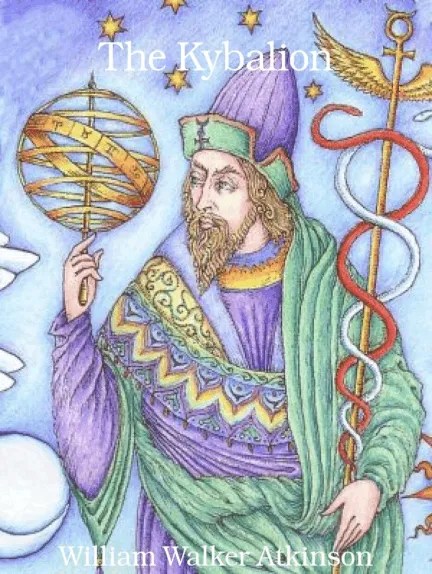
If you’ve spent any time exploring philosophy, metaphysics, or the roots of modern “New Thought,” you’ve likely encountered The Kybalion. This enigmatic little book, attributed to the mysterious “Three Initiates” but widely believed to be the work of New Thought pioneer William Walker Atkinson, has been a cornerstone of esoteric literature since its publication in 1908.
But over a century later, does it still hold up? Is it a profound key to understanding the universe, or a fascinating historical artifact? After a recent re-read, I found it to be a compelling blend of both.
The Allure of Hermetic Wisdom
The book’s central premise is instantly captivating. It claims to distill the ancient, secret teachings of Hermes Trismegistus, a legendary sage thought to be a fusion of the Egyptian god Thoth and the Greek god Hermes. These teachings are presented as Seven Hermetic Principles, including the famous axioms “As above, so below” and “All is Mind.”
The principles themselves are thought-provoking and beautifully stated. Concepts like Mentalism (the idea that the Universe is mental), Polarity (everything has its opposite), and Rhythm (the natural ebb and flow of all things) provide a lens through which to view the chaos of existence. They offer a sense of order and underlying structure that can be deeply comforting. For anyone seeking a philosophical framework for understanding cause and effect, or the relationship between thought and reality, The Kybalion provides ample material for reflection.
The Style: A Double-Edged Sword
This is where the book shows its early 20th-century roots. The tone is formal, authoritative, and can feel a tad grandiose to a modern reader. The “Initiates” speak with an air of absolute certainty, often addressing the reader as “The Neophyte.” While this was likely intended to inspire a sense of gravitas, it can sometimes come across as condescending or overly cryptic.
The language isn’t trying to be friendly; it’s trying to be precise. This can make for dense reading. This isn’t a book you breeze through in an afternoon. It’s a text to be pondered, a paragraph at a time. The flip side of this challenge is the reward: when a complex principle finally clicks into place, it feels like unlocking a puzzle.
The Human (and AI) Takeaway
So, who is this book for?
- The Curious Seeker: If you’re new to metaphysical ideas, The Kybalion offers a brilliant, structured foundation. Its principles are referenced everywhere in modern spirituality and self-help.
- The Skeptic: Read it as a fascinating piece of early 20th-century thought. It’s a brilliant example of how people have always sought to find pattern and meaning in the universe, and it’s deeply intertwined with the intellectual movements of its time.
- The Practitioner: Many find its principles, particularly Vibration and Mental Transmutation, to be incredibly practical tools for mindfulness and personal change. The idea that we can use an understanding of mental laws to “rise above” negative cycles is a powerful motivator.
From a more analytical perspective, it’s important to understand that The Kybalion is not a direct translation of ancient Egyptian texts. It’s a modern interpretation—a brilliant synthesis of Hermetic fragments, Atkinson’s own New Thought ideas, and influences from emerging scientific concepts of his day. Recognizing this doesn’t diminish its value; it simply frames it as a human creation inspired by ancient wisdom, rather than the ancient wisdom itself.
Final Verdict
The Kybalion is not a perfect book, but it is an important and enduring one. Its strength lies not in its historical accuracy, but in its ability to provoke deep thought and provide a usable map of reality for its readers. Its concepts have seamlessly flowed into the bloodstream of modern spirituality.
Approach it not as an absolute gospel, but as a conversation with a sharp, early-20th-century mind. Take what resonates, leave what doesn’t, and enjoy the process of deciphering its wisdom. It’s a book that rewards patience and critical thinking, and over a hundred years later, it still has something valuable to say.
Rating: 4.5 out of 5 Stars
 MindStateMatters
Leave a comment