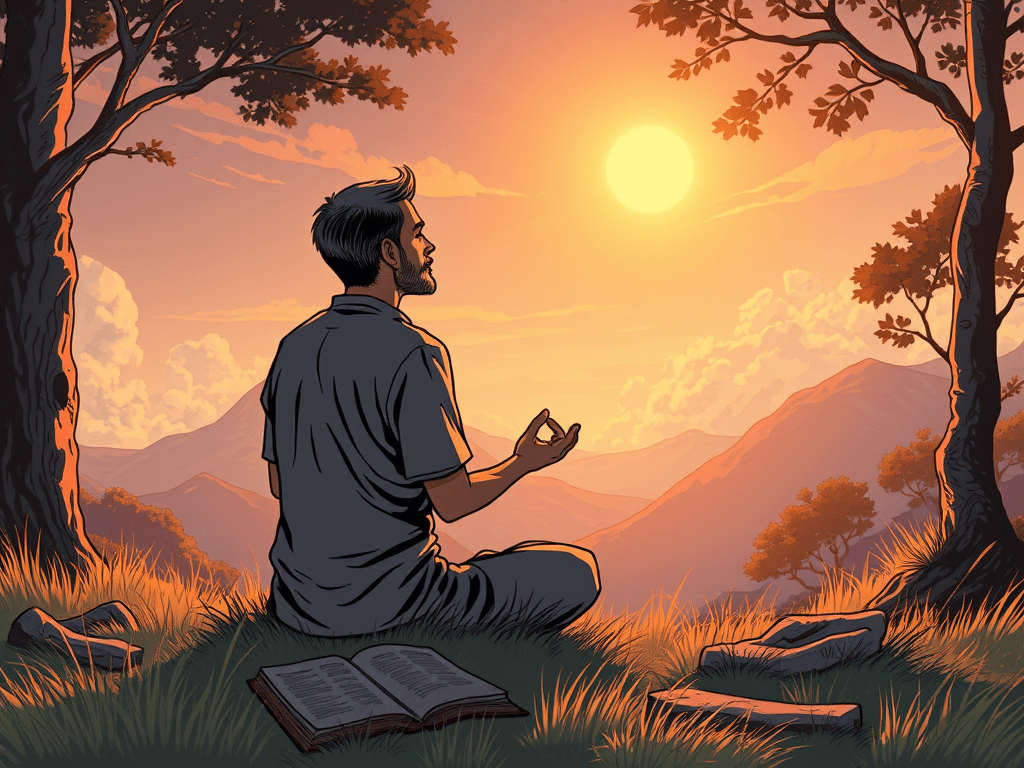
The Illusion of External Salvation
In The Key to Theosophy, H.P. Blavatsky dismantles the conventional notion of prayer as a means of divine intervention. She argues that true spirituality is not about begging for external help but about awakening inner power. Most prayers, she claims, are rooted in fear, dependency, and a denial of personal responsibility—qualities that weaken self-reliance.
“Theosophy teaches self-induced and self-devised efforts, not prayers to unknown forces.”
— The Key to Theosophy
Blavatsky asserts that genuine spiritual growth comes from self-effort, not supplication. When individuals habitually pray for miracles, they reinforce the illusion that they are powerless—that their fate lies in the hands of an external deity rather than their own will and wisdom.
Prayer as a Crutch for Weakness
Traditional prayer often conditions the mind to seek rescue rather than solutions. Theosophy teaches that human beings are divine in essence—fragments of the Universal Mind—and thus capable of shaping their own destiny through knowledge, discipline, and self-mastery.
Blavatsky critiques devotional prayer as a form of spiritual laziness, writing:
“The man who prays to be saved by some outside force remains a slave, while the one who relies on his own inner strength becomes free.”
By constantly petitioning an external God, believers outsource their agency, neglecting the law of karma—the principle that every action has consequences that must be faced and resolved by the individual.
The Theosophical Alternative: Meditation & Self-Transformation
Rather than passive prayer, Theosophy advocates:
- Meditation – Cultivating self-awareness and inner wisdom instead of pleading for external answers.
- Study of Universal Laws – Understanding karma, reincarnation, and the interconnectedness of life to take responsibility for one’s existence.
- Self-Discipline – Strengthening the willpower to overcome obstacles without relying on supernatural intervention.
Blavatsky emphasizes that divinity is within—not in some distant heaven. True spirituality is about unveiling one’s own latent powers, not begging for favors from an imagined savior.
Breaking Free from the Prayer Mentality
Theosophy does not reject reverence or contemplation but warns against passive dependence on prayer. Instead, it promotes:
- Self-Trust – Recognizing that you are your own savior, not an external deity.
- Action Over Pleading – Solving problems through effort and intelligence, not blind faith.
- Inner Divinity – Realizing that God is not a separate being but the highest potential within you.
Conclusion: From Begging to Becoming
Prayer, in its traditional form, often infantilizes the soul, keeping individuals in a state of psychological and spiritual dependence. Theosophy challenges this by teaching that true power lies in self-knowledge and self-mastery—not in petitions to an unseen force.
As Blavatsky writes:
“Theosophy is for those who will not be children forever, but are ready to become gods.”
The choice is clear:
- Continue praying for miracles and remain a passive spectator in your own life.
- Or awaken your inner godhood and take command of your destiny.
Which path will you choose?
Let me know, do you believe prayer weakens self-reliance? Share your thoughts below!
 MindStateMatters
Leave a comment